Argentina's football federation outlines post-Messi strategy with US expansion and digital brand play
The Argentine Football Association is doing something I wish more brand owners would do — treating its identity like a portfolio, not a billboard.
Corinne Talbot·updated July 15, 2026
What the "digital brand" framing actually means
I pay attention when a major institution starts talking about "exponential growth" of its own brand. That's not sports marketing language — that's asset manager language. In an interview with Telemundo, AFA's chief commercial and marketing officer Leandro Petersen walked through nine years of transformation: more than 50 multinational sponsorship deals signed since 2020, a deliberate pivot from a national sports body into a global commercial brand. The subtext is that brand value increasingly sits in domains, apps, social handles, and tokenized membership — not just in broadcast rights or trophy cabinets. When you measure a brand in clicks instead of eyeballs, the real estate shifts, and the owner who notices first tends to capture the rent.
The moves on the board
The concrete pieces are worth tracking on their own merits. AFA has launched "AFA USA," a dedicated US operation built around training fields in North Bay Village — roughly $10M committed to that single municipality between Miami and Miami Beach. They've also gone live on Socios, the same fan-token ecosystem powering FC Barcelona, PSG, and a long list of other major sports organizations. If you hold or flip sports-adjacent domain names — team names, league verticals, player name variants — this is the distribution model you should be watching closely. Tokens turn fandom into a scarce, tradable digital asset the same way a clean.com turns a niche keyword into recurring revenue. The mechanics rhyme more than most people in our space realize.
The post-Messi hedge
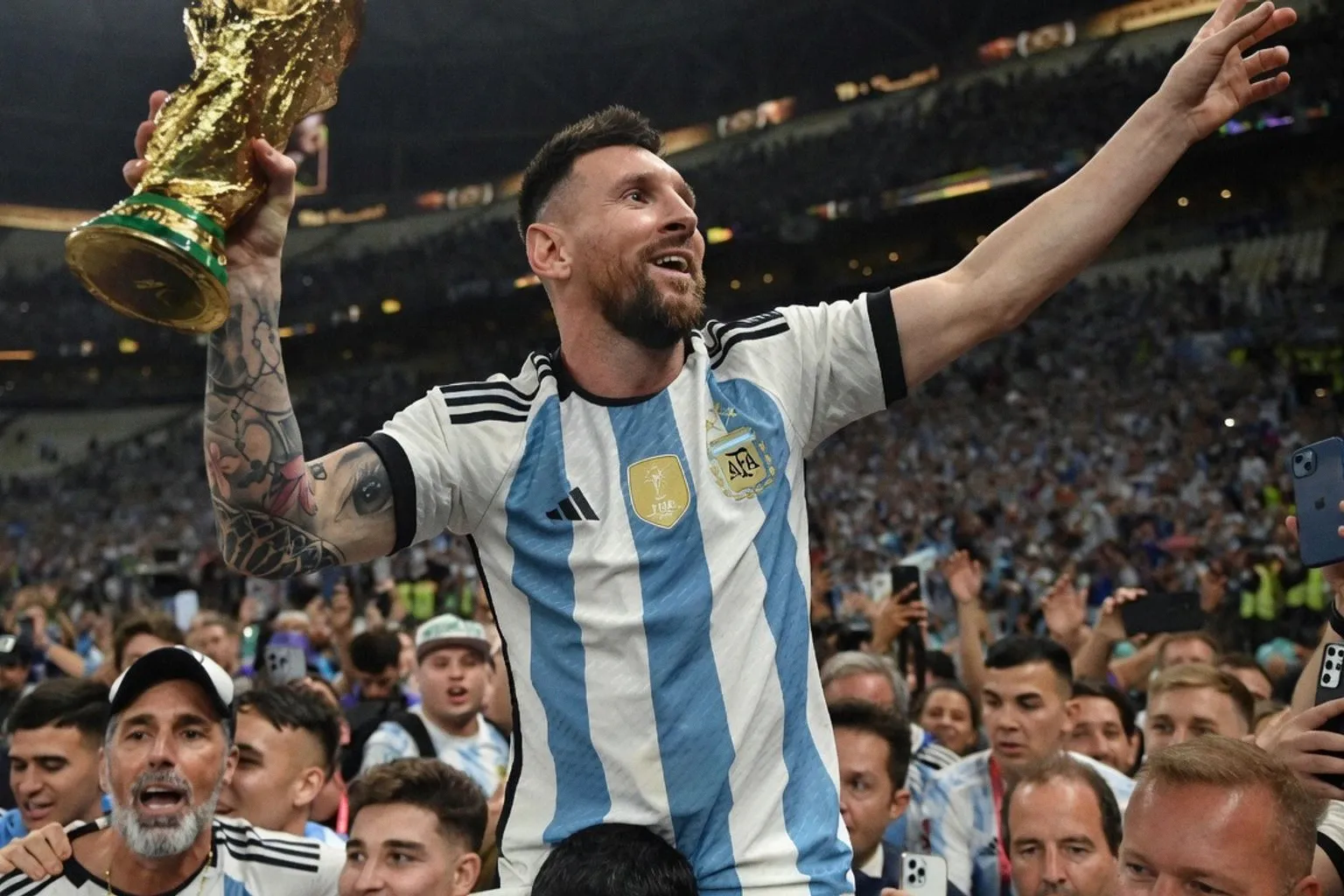
Petersen didn't pretend Messi isn't load-bearing for the bottom line — he acknowledged it directly. The federation is hopeful Messi plays in the 2026 World Cup across the US, Canada, and Mexico, but the stated goal is systems that don't depend on a single individual. Two pieces of that strategy land in plain English for anyone managing a portfolio: expand the US footprint hard before that tournament, and tighten youth retention so the development value doesn't get scooped by European clubs the moment a teenager breaks through. Diversify the revenue, capture more of the upstream value, and stop hoping one exit carries the entire year. If you've ever had one domain pay the bills while the rest of the portfolio sat, you already understand the math — and why building infrastructure around the asset beats building the whole story on it.